My Class Structure

I have a specific class structure that I have built to make yoga more approachable for beginners, while still being beneficial to experienced yogis. Specifically, I work my practices around specific writing pieces and themes that resonate with me. All the classes I create are flows that I enjoyed practicing with my teachers, and have made them my own, tied into the themes I find.
That being said, my classes are also formulated to help those who are building mobility and seeking recovery both physically and mentally, as opposed to seeking a workout. I plan my classes around the release of stress and activating the parasympathetic nervous system to help lower cortisol. The main focus is on utilizing the breath at the beginning of class and making it a focus point to come back to, so that students are more aware of when their body is entering fight or flight.
Our goal is to work through emotions and process them. What does our body do as we move through the space? How does the body work in these states? Why do we think this affects us? etc.
This approach is largely based on trauma-informed yoga and more traditional practices. By finding movement in the body, we prepare to find proper rest when we reach savasana (corpse pose) at the end of practice. This helps make the ending meditation so much more beneficial. It helps students find relaxation and release. The core of yoga is union with the "self," and during yogic practice, we observe before coming into a final reflection.
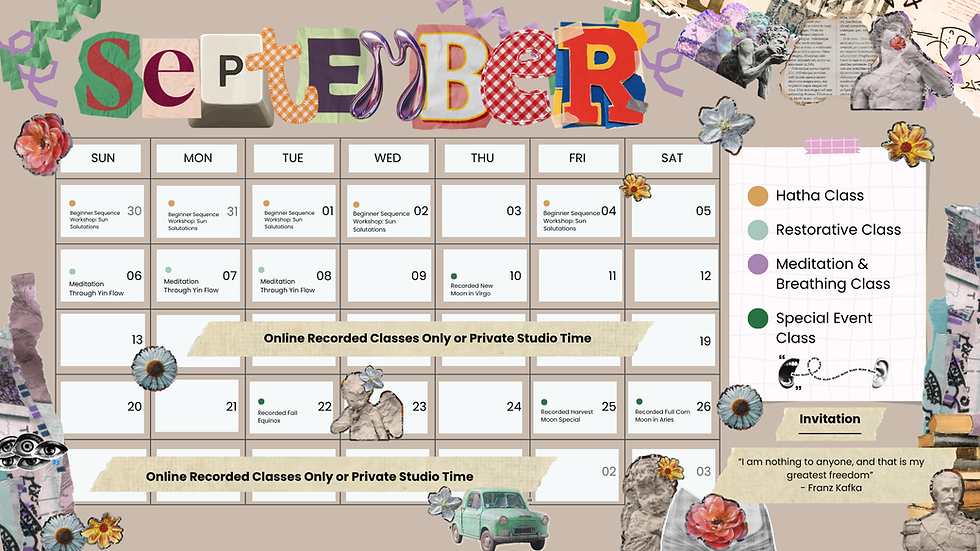
I organize a micro-class structure rooted in tradition but aimed at making yoga more approachable and focused on mental and emotional benefits. Both hatha and restorative classes follow this model—hatha offers more flow, while restorative centers on tension release and stretching.
This style of class is perfect for beginners, those seeking mobility training, people with aging joints or joint issues, lowering cortisol, stress relief, and targeting mental health. I’m going to stop there for now, but there are a lot more benefits to this style of class.
My goal as a teacher is to help people find connection and strength within themselves to promote creativity and resilience in both the body and mind.
Micro-Class Structure
Minutes 0-10: Breathing & Meditation with Little Movement
Main Practice
Minutes 11-35: Main Sequences & Flows
Minutes 36- 40: Light Stretching
Minutes 41-60: Final Breathing & Meditation
First 10 Minutes
I start the first 10 minutes of class by letting my students settle in. We find a comfortable seated position, occasionally lying down, but I usually like to sit on a cushion or block. Then, we do some initial meditation and breathing that can be incorporated into the class. For example, in my Elements series, I use kapalbahti breathing in a couple of simple warm-ups to activate a warming sensation. Or, in my water practice, we utilize cooling breaths like sheetkari and sheetali, while also using ujjayi (ocean's) breath.
After initial meditation and breathing, we perform some slow warm-up stretches to wake up the body. I like to do some firelog bends, or come up into tabletop and do some spinal rolls or a deep balasana (child's pose).
My current favorite warm-up flow is
Balancing Table
Rainbow Leg Movements
Modified Half Moon
Gate
Wild Thing
Balasana
Also, moving straight into sun salutations always gets everyone warmed up. I only do that in my personal practice. I try to keep the beginning of class easy for my beginners and the people who want a more mindful practice.
Meat of the Practice (Minutes 10-40)
Here is where I'd actually make you do a sun salutation... Probably.
I don't usually make people do a traditional Suryanamskara A or B, but do a variation that is more accessible, if I'm going to have you do one. I could go into a rant about how great sun salutations are because their sole intention is to lubricate the joints and activate the breath, but I won't. However...
Sun salutations are the basis of hatha flow. Mastering them helps build mobility in the body and keep your joints healthy. If there's only one flow you should always default to, it should be a sun salutation.
Typically, I incorporate a hatha-style flow here based on the practice theme. A balancing flow to target the air element to help find a more free and light perspective on the practice and body. Grounding stretches to finding connection and restorative. It all depends on the class goals for the session, and I am always down to deviate from the plan based on what the class wants.
This is where my small class structure really comes into play. Both the Micro-Class and keeping a 2-3 person class help me deviate and address individual practices more easily than I could in a larger class. While I like to build themes of my own, I am always mindful and ask what the students want from class. Maybe we came for a hatha class, but halfway in realize we need something different?
Practice time is where we explore the mat and ourselves. I like to keep that creativity throughout the class as we find our own rhythm.
End of Practice ( Minutes 41 - 60)
This is the final stretch—both literally and figuratively.
During this part of the practice, I will have students perform a few more postures to wind the body down. Depending on the type of practice or theme, sometimes this begins earlier. However, during this time of the practice, our main goal is to activate the parasympathetic nervous system and begin to calm the body down.
This begins at the beginning of practice, but sometimes we lose it during the hatha-style flows. I try to incorporate the breath and keep mindfulness in the body throughout the practice, so that we don't lose that activation. However, more difficult hatha flows can send this out of balance. That's why this part of the practice solely focuses on strengthening that activation or reactivating it.
We end in a comfortable position; sometimes, we do a few different ones depending on the breathing practice. Here is where we begin our final pranayama (breathing) and meditation practice.
Here we see the goal of yoga, finding connection, in action. We work the body to reach this point of relaxation so that we can explore that connection.
I love taking my legs up the wall and performing some belly breathing and ujjayi breaths. These are both great breaths to find awareness in how the breath moves, as well as activate that parasympathetic nervous system.
In terms of meditation, I will usually do either a counting breath or a short body scan before a final long reading for class. I like to use this reading as a point of reflection that students can carry with them into their day, or maybe even journal on it.
In order to process our physical and mental state, we have to reflect.
Leaving class, it's my hope that students have found some sort of release and something to work on. I want them to be mindful as they move through life, and carry these lessons with them, like I have learned to do for myself.

Comments